
Essay
From Bottle to Backbone
Why trust, not water, is Al Ain Water’s real product and where it migrates next
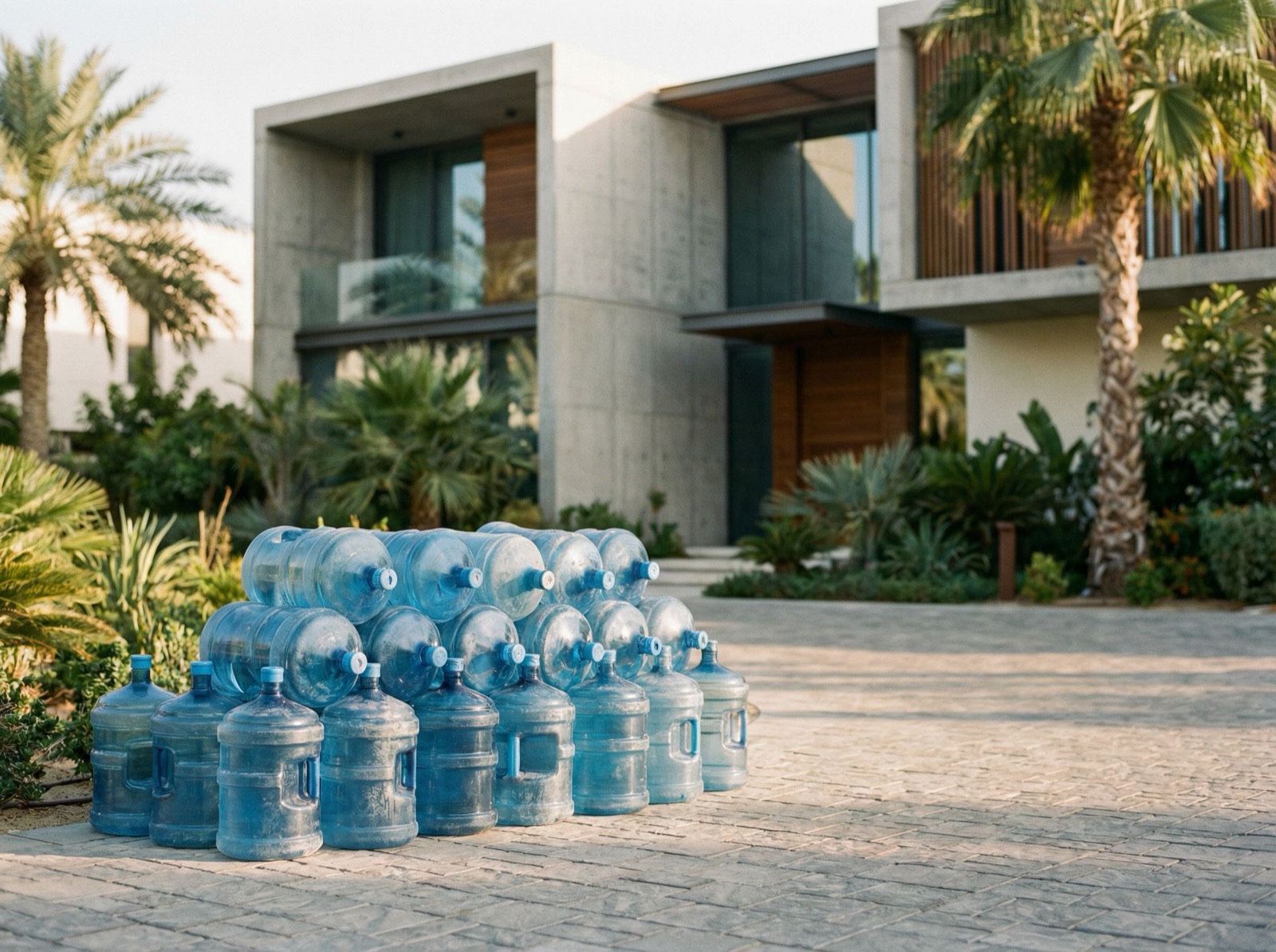
It started with something trivial. A water delivery scheduled for Tuesday arrived on Thursday. The water arrived. The brand delivered what it promised. The price difference between standard and Zero was negligible. Yet the small inconsistency, combined with a fragmented digital journey from app to website to WhatsApp, revealed something structural. Minor operational details often expose strategic architecture.
Water is the most basic utility in modern life. In stable systems it becomes invisible. When it functions, nobody notices. When it fails, the reaction is immediate and emotional.
Years ago, during a project for PWN in the Netherlands, a regional disruption affected roughly 250,000 consumers. Within an hour nearly 100,000 service calls flooded the utility. The backlash was not driven by frequent breakdowns but by their rarity. Interruption was so unusual that tolerance approached zero. Reliability had become an unquestioned assumption.
In the Netherlands, bottled water plays only a marginal role. Tap water is trusted, regulated and culturally embedded. Households pay roughly EUR 2.00 per cubic meter all-in, equivalent to about AED 8 per cubic meter, reflecting full cost recovery and long-term infrastructure investment. Even small regional outages trigger national media coverage. Supermarket shelves empty within hours. Disruption is treated as exceptional precisely because trust is centralized and institutionalized. Bottled water survives mainly as an emergency hedge.
Abu Dhabi presents a different configuration. Residential tap water costs roughly AED 3.75 per cubic meter, less than half the Dutch level in AED terms despite the capital intensity of desalination. The molecule is not the constraint. Desalination facilities produce high-quality water at scale. The distinction lies in system design. Distribution often includes building storage tanks and rooftop reservoirs, with responsibility for the final stretch shared between utility and property management. The system is robust, yet layered. In that layering, trust is partially distributed. Bottled water occupies that space. It is not purchased for volume. It is purchased for assurance.
Al Ain Water has optimized this assurance layer. As the de facto market leader in Abu Dhabi’s bottled water segment, it combines brand trust, route density and operational scale. A five-gallon bottle priced at around AED 10 translates into more than AED 500 per cubic meter. Drinking water in a three-person villa household represents less than one third of one percent of total water consumption, yet it sustains a parallel logistics chain of trucks, plastic, storage, subscriptions and deposits. The product is not water. The product is confidence.
Packaging confidence in bottles introduces friction. Even with reliable delivery, households track inventory, manage returns, reconcile payments and allocate storage space. Each activity adds a small but persistent cognitive load. In premium segments, price rarely determines behavior. Convenience and invisibility do.
Consider a gated community of one thousand villas with average property values of AED 12 million. Total asset value exceeds AED 12 billion. Daily consumption, including shared facilities, approaches four thousand cubic meters. If internal infrastructure were upgraded so that all delivered water met certified premium standards at AED 6 per cubic meter, the incremental annual cost per villa would likely range between AED 800 and 1,000 after eliminating bottled purchases.
At community level, the economics are meaningful. The price uplift from AED 3.75 to AED 6 across total volume would generate roughly AED 3.5 million in additional annual revenue. Required capital expenditure for storage, polishing filtration, monitoring and redundancy could plausibly sit near AED 20 million. Payback would occur in approximately six years.
The more powerful lever, however, is asset value. A one percent increase across a AED 12 billion property base equals AED 120 million. Even a 0.2 percent uplift would offset full infrastructure investment. Premium potable infrastructure thus becomes an asset strategy rather than a utility upgrade. It signals governance, quality and sustainability. In luxury real estate, perception converts into valuation.
Environmental implications reinforce the case. If each villa consumes one five-gallon bottle per person per week, a thousand-villa community would eliminate approximately 156,000 bottles annually. Conservative assumptions indicate a reduction exceeding 300 tons of carbon dioxide per year once delivery logistics, washing cycles and plastic handling are removed. Truck movements decline. Plastic intensity decreases. The positioning aligns with national sustainability ambitions.
Under these conditions, bottled water does not lose on price. It loses relevance. Once drinking water is fully embedded within core infrastructure, the separate category contracts. This transition has already unfolded in high-trust European systems, where bottled water persists mainly as niche consumption or contingency supply.
The broader pattern is structural. Fragmented trust enables companies to monetize reassurance. Centralized trust renders reassurance invisible. As trust shifts location, economic value follows. Categories reorganize accordingly.
For Al Ain Water, the issue is not current performance. The existing model works. The strategic question concerns trajectory. If confidence remains packaged in five-gallon bottles, route density and operational efficiency remain decisive. If it migrates upstream into certified community infrastructure, the basis of advantage changes.
A delayed Tuesday delivery is insignificant in isolation. Yet operational detail often signals structural direction. The future of bottled water in Abu Dhabi will not be shaped by incremental subscription improvements. It will be shaped by the location of trust within the system.
Confidence is migrating. The only question is who positions ahead of it.
Cite this piece
Schotman, R. (2026). From Bottle to Backbone. Outdoor Connect. https://outdoorconnect.ae/library/from-bottle-to-backbone/
© Outdoor Connect 2026. All rights reserved. Quote with attribution. Use and attribution