
Essay
Heroic Wines, Heroic Strategies
What Steep Slopes Teach Us About Business
Heroic Viticulture: When Constraints Create Quality #
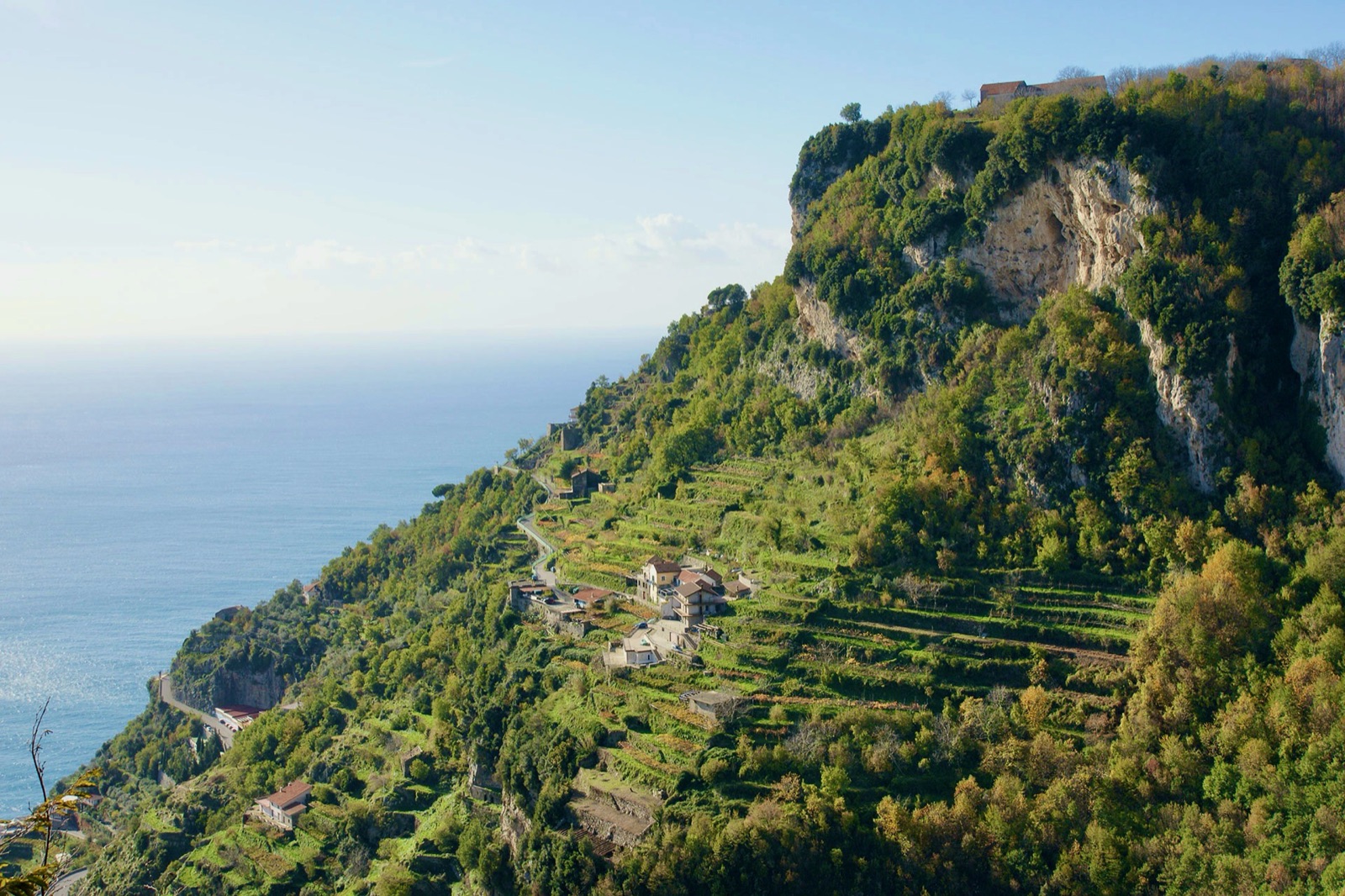
Some of the wines I enjoy most come from places where making wine is almost impossible: Valle d’Aosta, Alto Adige, Etna, Amalfi, and Valtellina. These are examples of what is often called heroic viticulture: vineyards clinging to steep slopes, carved into terraces, or planted on volcanic soils. The conditions are extreme, the parcels small, and every step of the process demands extraordinary effort. Mechanization is virtually impossible. Everything is done by hand, yields are low, and costs are high. And yet, paradoxically, these very constraints are what make the wines so distinctive and compelling.
In these regions, the environment itself becomes the winemaker’s ally. The abundant sunshine, combined with large diurnal shifts — sharp differences between day and night temperatures — allows grapes to ripen fully while retaining freshness and acidity. The steep slopes cut through diverse soils, giving wines layers of minerality and character. The impossibility of scaling up ensures that what is produced is inevitably artisanal, premium, and authentic. In other words: constraints force quality.
Strategy in a Glass of Wine #
This is where wine becomes a lens through which we can see strategy. Michael Porter famously argued that trade-offs define positioning: you cannot be all things to all people. Different wine regions illustrate this perfectly. Bordeaux thrives on scale and the power of distribution. Barolo commands respect through terroir and icon status. Heroic viticulture, by contrast, creates value through scarcity and uniqueness. Each is a winning model — but under very different rules.
Bruce Henderson, the founder of BCG, went a step further by claiming that true strategy is not only about playing harder within the rules, but about changing the game itself. Heroic viticulture demonstrates this principle vividly. On a volcanic slope or a coastal cliff, the normal advantages of scale evaporate. The terrain itself rewrites the rules: small is not weakness, but a structural advantage.
Why Scale and Distribution Can Fail #
Large wine producers typically hold two great strengths: lower production costs through scale and the distribution muscle to reach global markets. In heroic winemaking, however, both assets lose their power. Terraces on the Amalfi Coast or vineyards on Mount Etna cannot be industrialized. Volumes are inherently scarce. And no matter how strong a distributor’s network is, it cannot conjure supply where the land dictates there will only ever be a little. Scale and distribution collapse in the face of nature’s limits.
History gives us a vivid metaphor. At the Battle of Thermopylae, the Persians commanded an immense army, yet their overwhelming size counted for nothing in the narrow pass where the Spartans fought them. Their scale was rendered irrelevant by the terrain. Heroic vineyards do the same to global wine giants. They neutralize their strengths by forcing them into conditions where those strengths cannot be applied. This is the essence of unfair competitive advantage: making your competitor’s greatest assets useless or even a weakness.
Three Lessons for Business Leaders #
For business leaders, heroic viticulture carries three clear lessons. First, constraints sharpen focus: you cannot be everything, so you must decide what to be. Second, trade-offs create clarity: premium positioning often emerges precisely from what you cannot do. And third, the most powerful form of advantage comes from shifting the rules of competition so that your rivals’ strengths no longer matter.
Why This Resonates With Me #
As both a certified wine lover and a strategy consultant, I find myself drawn more often to a glass of Nebbiolo from a steep Alpine slope than to a Bordeaux. Not because one is inherently better, but because such wines embody purity and resilience — qualities that also define great strategy. The biggest does not always win. More often, it is the one who understands their constraints, embraces them, and turns them into an unfair advantage.
Outdoor Connect #
Independent Strategy Consulting for Mid-Market Leaders
Cite this piece
Schotman, R. (2025). Heroic Wines, Heroic Strategies. Outdoor Connect. https://outdoorconnect.nl/library/heroic-wines-heroic-strategies/
© Outdoor Connect 2025. All rights reserved. Quote with attribution. Use and attribution