
Essay
Power, Permission and Conscience
What an Organisation Can Grant a Leader, and What It Cannot
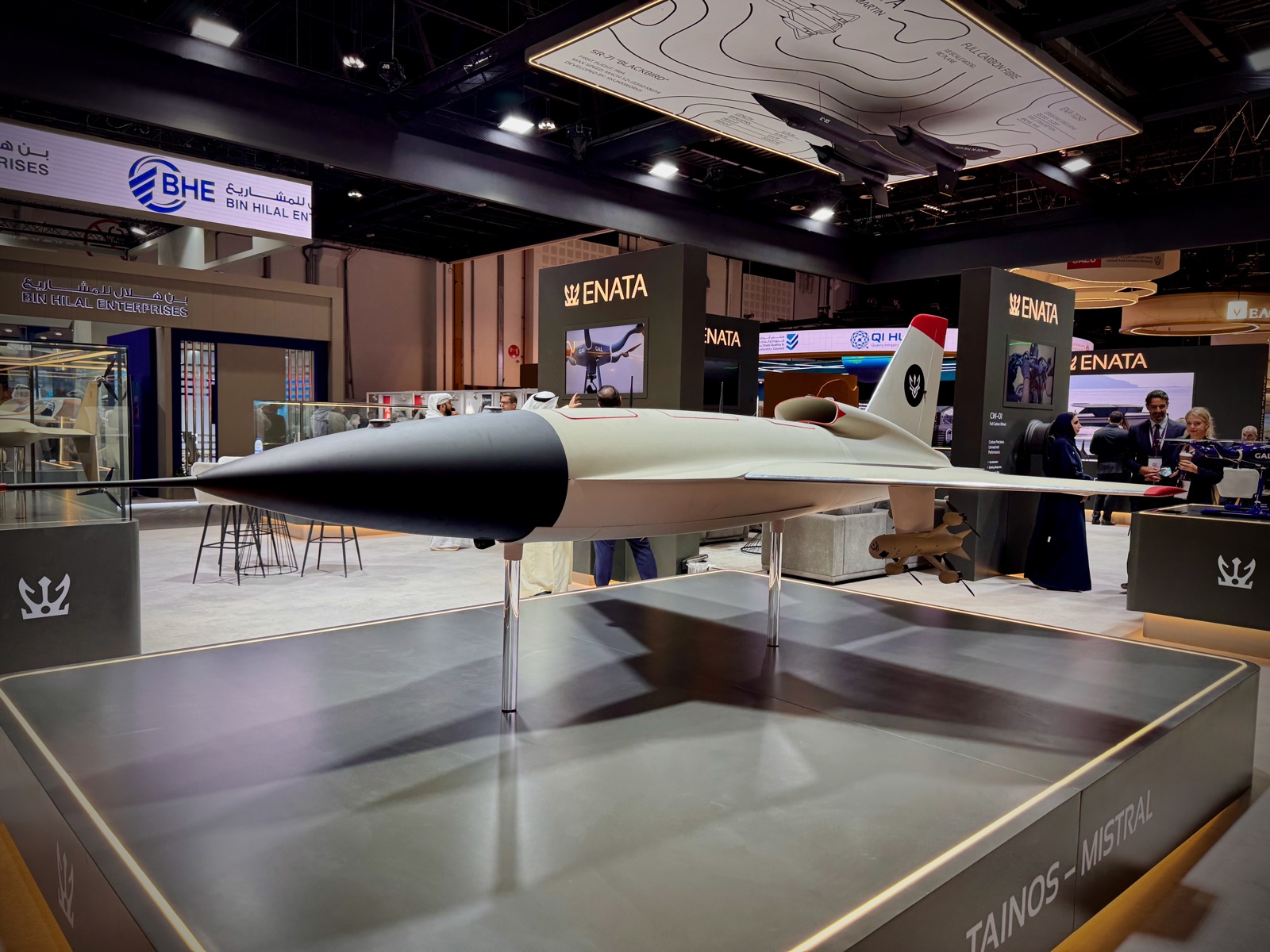
In May I spent a day at Make It In The Emirates, MIITE, the national industry fair in Abu Dhabi. It is not a weapons show. It is a country putting its making on display, food and pharmaceuticals, ships and steel, software and solar, twelve sectors of ambition under one roof. And woven through all of it, without apology, the defence industry. Drones. Missiles. Vehicles, boats, aircraft. I stood in front of a drone and admired it the way you admire anything well made, the clean line of it, the obvious intelligence in the engineering. That is what the hall was built to do, and it did it to me.
On the drive home the sirens went. Incoming. The same kind of machine I had admired at noon was now somewhere above the city, coming down.
That is the whole of this essay, compressed into one day. In the afternoon I was the maker's audience. By nightfall I was the target. The distance the hall had quietly erased, between building a thing and standing under it, closed in a few hours. And the difference between admiring the drone and fearing it turned out to be the only thing that mattered. I had been on both sides of it before dark.
There is an easy version of this story, and it is not true. It has a writer judging the arms trade from a safe distance, hand on heart. But I was not at a safe distance. In the war that began on 28 February 2026, the Emirates absorbed one of the heaviest barrages in the region. By official Emirati counts, more than two thousand missiles and drones were fired at the UAE, and not only at military targets. Homes, airports, hotels, industrial areas. A country that has just been attacked, and is proud of the means to defend itself, is doing nothing wrong. The self-defence is real, and I felt it in my own chest that night.
Which is exactly why the question does not go away. Take the weapon at the moment its justification is strongest, freshly after an attack, in the hands of the attacked. Even there the moral question refuses to close, and if it will not close there, it never simply closes. The hard case is not some dark corner of the trade. It sits right beside the most legitimate use there is.
What the hall could not show is this. A weapon is licensed. It is papered, certified, lawful, defensible as defence. But the same object, in other hands, for another purpose, becomes something else. The licence travels with the crate. The conscience does not. The same drone is a defence here and a crime there, and the difference is settled later, by someone the maker will never meet. The morality was never in the object. It was always in the use. The hall showed the craft. It could not show the landing, because that is not what halls are for.
Step back from the weapon, because this is not really about weapons. It is about every organisation. A company cannot feel. It is not a person, it is people coordinating toward something the organisation can measure, and it pursues that measure with great skill and no remorse. A conscience is not native to the machinery. It has to be carried in by people, and then protected by design, or it is simply not there. Left to itself an organisation is not wicked. It is amoral, which is the resting state of any system built to chase a goal. Morality is the expensive interruption, the thing people have to build in and keep alive.
Why, then, do we tolerate the amoral kind? Partly because the people it harms have no vote inside it. They sit outside the loop, downstream, the neighbour, the supplier two countries away, the next generation, with no way to object. Partly because legality launders it, and what is permitted slowly starts to feel like what is right. And partly, the uncomfortable part, because most of us are standing where the benefits arrive and not where the costs land. The admiration in that hall was exactly that, the side where the benefit shows and the cost does not. Once you see organisations this way, the worst examples in history stop looking strange. They start to look like something a system can simply do.
A little after that day I went to Auschwitz, with a group. You go expecting the enormity of it, and it is there. But the thing that lodged in me was smaller and would not leave. None of it could have run on hatred alone. It needed companies. Someone supplied the materials. Someone kept the books. Someone tendered for the contract and was pleased to win it. So I asked the obvious question, and the answer is the one that stays. Were they all evil? No. If they had been monsters it would be a story about monsters, contained and finished. They were ordinary. That is the unbearable part, because ordinary is everywhere, in every company, in any year.
I have to admit something. I had written about this before, more than once, power and permission and conscience, the whole architecture of it. I knew it. I could have set it all out the week before I walked through that gate. And it still went off in me as if it were new, only once a place had made it physical. That is my own argument turned back on me. Knowing is not the thing. Knowing did not stop me admiring the drone. The chair where judgement is meant to sit can be fully furnished with knowledge and still stand empty.
There is a reason the suppliers could not save themselves with their consciences. A state like that closes the exit. The prisoner cannot leave, and in the end neither can the supplier, because refusal could become dangerous, and in the worst cases fatal. When the door is shut, the ordinary thing that keeps organisations honest, the freedom to walk away, is gone, and the only thing left between the system and the horror is one person's judgement. Understanding how that happened is not the same as forgiving it. The absence of a monster is not the absence of responsibility.
We all sit somewhere in a chain. From wherever we sit we can see a little of where the work ends up, never the whole of it, but a little. And almost every seat feels too small to matter. The clerk, the buyer, the engineer, each can tell himself his part is too minor to be the place it goes wrong. Stack up enough seats that each felt too small, and you have built something no one chose and no one stopped. This is not the comfortable thought that we are all a little guilty, which quietly lets the real decisions off the hook. It is the harder one. Because the suppliers were ordinary, no seat is innocent by default, not yours and not mine.
The seats are not equal, though. The one who signs the export sees more, and can stop more, than the one who files the invoice, and so he carries more. And here is the seat this essay has been about all along. A leader holds power the organisation gave him. That grant is his permission, and it is real. But permission reaches only so far. It governs the inside, the people who agreed to be led. It says nothing about the outside, about those downstream who never agreed to anything. An organisation can hand a leader his authority. It cannot hand him a conscience. And so the person with the most permission carries the heaviest moral load, not the lightest, because his seat sees furthest and his refusal can stop the most. The legitimacy that made him a leader is the very thing that obliges him to look.
This is where strategy stops being enough. Strategy chooses means for ends, and it does that well. What it cannot do is decide whether the end should be pursued at all. That is not something reason reaches by calculation. It is a boundary you recognise, or fail to. And recognising it takes the one resource an organisation cannot put a figure on, time to look, set apart from the rush, time that returns nothing but clarity about a limit. No metric improves. No deadline is met. Which is precisely why it is the first thing a busy system strips out. The thing a leader most needs is the thing his own machinery is built to delete.
So what I would wish for the people in the heaviest seats is not what it sounds like. Not time for themselves. Time to see what they would rather not see, while they still can, before the position forces the seeing on them at a moment that can no longer be repaired. The suppliers were ordinary people, which is not an acquittal but the whole point, and the days were busy, and the question never came up in time. The moment seduces. It seduced me in a bright hall in Abu Dhabi. You cannot trust yourself to it. You can only build the pause, on purpose, again and again, the deliberate quiet in which the judgement that was there all along becomes audible once more. Not everyone is handed an Auschwitz at the right moment. So you make the confrontation a habit, instead of waiting for the accident.
The conclusion is small, and hard. A board can write such a pause into how it governs. A person can write it into how he lives. The chair is there in either case. The only question is whether anyone is sitting in it.
Cite this piece
Schotman, R. (2026). Power, Permission and Conscience. Outdoor Connect. https://outdoorconnect.nl/library/power-permission-and-conscience/
© Outdoor Connect 2026. All rights reserved. Quote with attribution. Use and attribution