
Dilemma in the public record, 2025–2026 · Freedom to Operate
A supplier behind DigiD may be acquired by an American company.
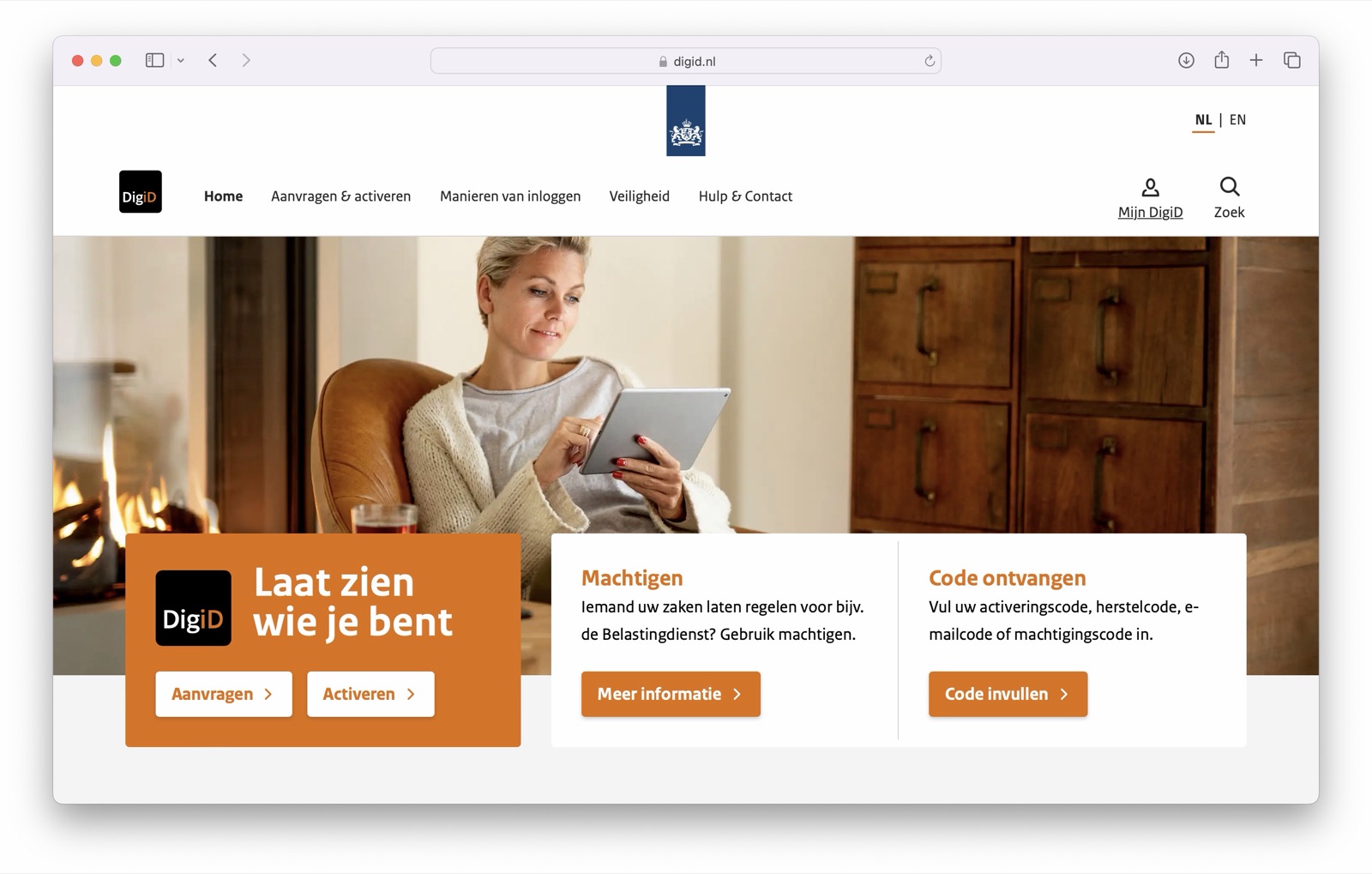
DigiD is the digital access lock of the Dutch state. Millions of citizens use it for tax returns, health records, pensions, permits, education, business administration and elections. The possible takeover of Solvinity, one of its critical suppliers, was handled in The Hague as a technical security file. But an American takeover places DigiD under American jurisdiction.
What we argued
Treat digital identity like water safety.
- Designate DigiD by law as critical infrastructure without foreign jurisdiction.
- Bring the control points back under Dutch or European authority: not only the data, but also hosting, support, access control and failover.
- Invest structurally in digital sovereignty, through a strategic fund with a long-term mandate, as for water safety and energy infrastructure.
What happened next
In May 2026 the takeover was blocked.
After more than six months of pressure and questions from parliament, and with many experts advising against the takeover, the Dutch State Secretary for Economic Affairs prohibited the acquisition of Solvinity by the American company Kyndryl, on the advice of the Investment Screening Office, to protect the public interest. A majority in parliament also set a condition: the DigiD contract may not be renewed in 2028 if Solvinity comes under American ownership. Solvinity has appealed.
Sources: NOS; Accountant.nl; NOS, on the appeal; Tweede Kamer, expert round table.
Why this is not an IT question
DigiD is not an application, a procurement or an IT product that can easily be swapped. It is a control point on which almost every public process leans. Whoever can influence it touches not a service, but a nation state.
The real risk is not that DigiD fails tomorrow. It is that the Netherlands, without noticing, hands control over its own identity system to a foreign jurisdiction: not through hostile action, but through administrative short-sightedness in a world where power is increasingly exercised through digital channels.
Framework
Freedom to Operate: ownership and permission, and who can say no. Source essay (in Dutch): DigiD dreigt een Amerikaans drukmiddel te worden.
The question for your board