
The 2026 Iran-War Series · Part 3 of 9
When Strategies Fail
How the United States entered a war it could not strategically win
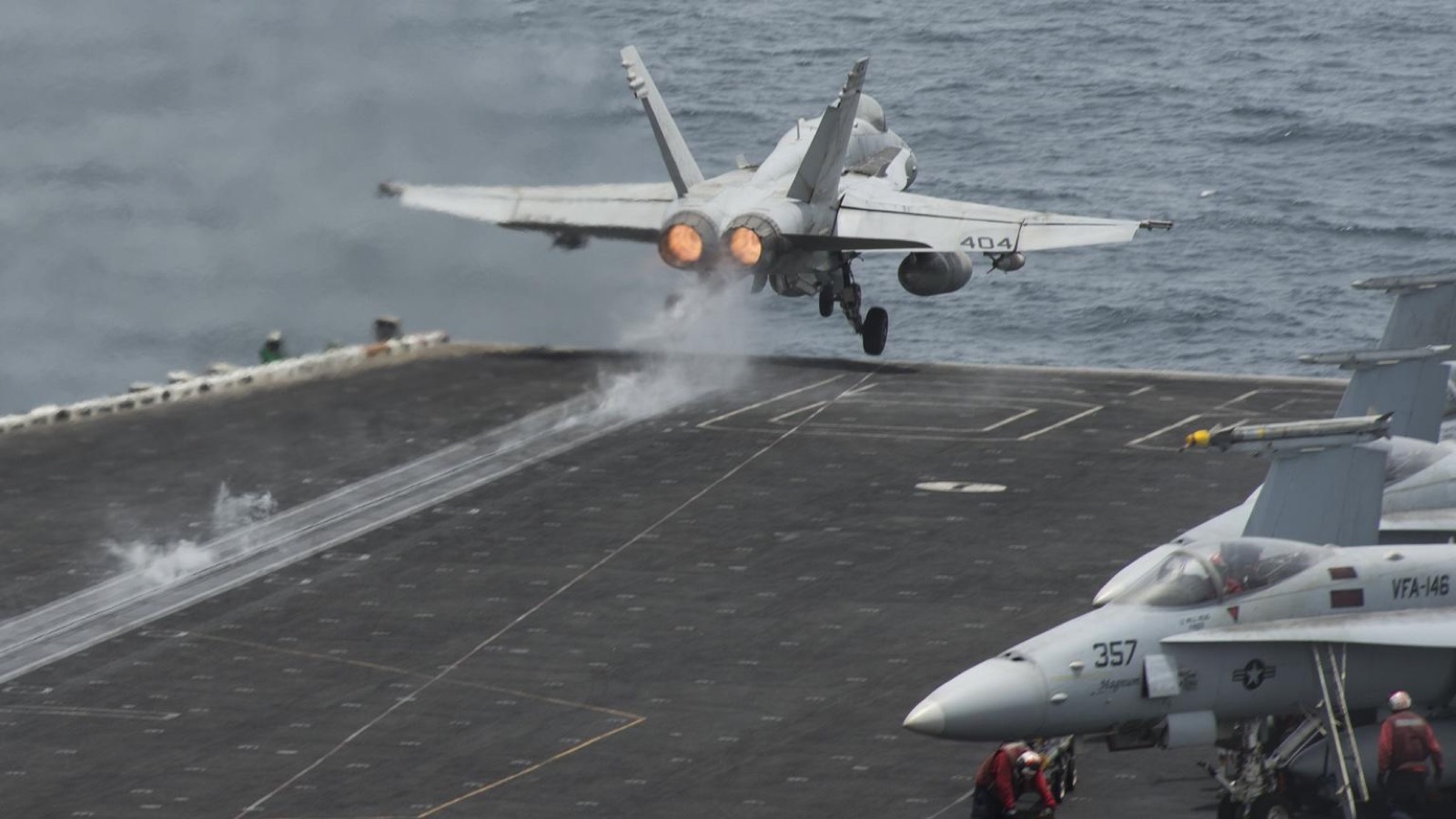
Two weeks into the war, Iran has suffered serious damage. It is also winning strategically. Understanding why requires a distinction that military power alone cannot resolve.
The previous essays in this series described the conflict from the Gulf itself: the missile alerts over Abu Dhabi, the disruption to energy infrastructure, the quiet recalibration underway among regional states. This essay asks a different question. Not what the war feels like from inside the region, but what it reveals about the model of power that launched it.
Iranian military installations have been struck. Commanders have been killed. Significant portions of missile infrastructure have been degraded. Yet the war continues. Drones and ballistic missiles are still being launched. Shipping through the Strait of Hormuz remains disrupted. Oil prices have surged. Gulf infrastructure stays under pressure.
If the strategy was rapid coercion, the strategy has already failed.
Understanding why requires a distinction that is often lost in discussions of modern warfare: the difference between assets and control points.
Assets enable action. The United States entered this conflict with overwhelming ones: aircraft carriers, stealth aircraft, cruise missiles, unmatched intelligence and a global logistics network capable of sustaining operations indefinitely. These assets allow the United States to destroy targets with extraordinary precision and at scale.
But destroying targets is not the same as controlling the system in which those targets exist.
Control points operate at a different level. They include legitimacy, alliances, economic chokepoints, political endurance and institutional resilience. They determine whether destruction can be converted into political outcomes. Assets produce results on the battlefield. Control points determine whether those results produce order beyond it.
In this war, the United States brought the former. It did not bring the latter.
The first sign of this mismatch is the war's shifting objectives.
At the outset, the campaign was framed as a response to an imminent threat: protecting American personnel and deterring Iranian attacks on US forces and allies. Within days, the objectives broadened to degrading Iran's military capabilities. Within a week, a third objective had entered the discourse: the possibility that sustained pressure could trigger the collapse of Iran's leadership or encourage internal uprising.
These were not sequential phases of a clearly articulated strategy. They existed simultaneously, without hierarchy, each redefining what success would mean.
A strategy may evolve. What it cannot do is redefine success while the war is underway. When the definition of victory shifts mid-conflict, it usually reflects a deeper uncertainty about what the war was intended to achieve in the first place.
Historically, American military power has not operated in isolation. Its strategic effectiveness has depended on political control points that amplify its impact.
The 1991 Gulf War is the obvious reference point. The United States entered that conflict not only with overwhelming military force, but with a United Nations mandate, a large multinational coalition and broad regional participation. These were not decorative additions. They transformed a military campaign into a political settlement that reshaped the regional order for a generation.
In the current war, those elements are absent. There is no UN mandate. No broad coalition conducting offensive operations. Most regional partners have confined themselves to defensive measures, protecting their own infrastructure while avoiding direct involvement. American military power remains immense. The political architecture that converts power into order has not accompanied it.
Iran, by contrast, prepared for a different kind of conflict.
Iranian leadership understood from the outset that it could not defeat the United States in a conventional military confrontation. The asset disparity is simply too large. Iran's strategy was therefore built around three objectives that do not require conventional victory: regime survival, the capacity for sustained retaliation, and the imposition of economic and political costs on the broader system.
Iran did not need to win. It needed to endure.
This distinction matters more than it might appear. A side that requires victory to achieve its objectives must achieve victory. A side that requires only endurance can succeed by not losing. These are not symmetric conditions. They favour Iran in every scenario short of regime collapse.
Iran's endurance rests on control points built over decades.
Institutional resilience is the foundation. Iran's military and security structures are deeply layered, with decentralised command networks and redundancy across key capabilities. The IRGC, the Basij and overlapping security institutions provide continuity of function even under sustained attack. A system built around leaders collapses when those leaders die. A system built around institutions absorbs their loss.
Missile and drone saturation provides a second control point. Iran has invested heavily in inexpensive systems capable of depleting interceptors and imposing costs on technologically superior adversaries. The asymmetry is deliberate: the cost of launching is a fraction of the cost of intercepting. Even degraded capabilities can sustain pressure.
The Strait of Hormuz is the most consequential control point of all. Roughly a fifth of global oil trade passes through this narrow corridor. Iran does not need to close it to use it. The credible possibility of disruption is itself a source of leverage. Oil markets respond to uncertainty, not only to events. Every day the war continues, Hormuz imposes a cost on the global economy that no American air strike can neutralise.
This is what reframing a conflict looks like in practice. The United States defined the war as a military confrontation. Iran redefined it as an endurance contest, an economic disruption and a political pressure campaign simultaneously. The side that defines the game rarely needs to win it outright.
Three broad outcomes now appear possible.
The most likely is a negotiated or implicit off-ramp: the United States claims military success, pointing to degraded Iranian capabilities; Iran claims strategic survival and continued resistance. Both sides can present their domestic audiences with a version of the outcome they need.
A second possibility is further escalation, drawing additional regional actors into the conflict and expanding its economic consequences significantly.
A third outcome is prolonged stalemate: no decisive result, sustained regional destabilisation and rising costs on all sides.
In all three scenarios, domestic politics will increasingly shape the decisions made. Rising energy prices, the possibility of American casualties and the approaching mid-term elections create a political clock that operates independently of the military situation. Wars can remain militarily manageable long after they become politically unsustainable.
At its core, this conflict is not a failure of execution. It is a failure of strategic architecture.
The United States assumed that overwhelming assets would determine the outcome. Iran prepared for a conflict in which control points would matter more. The result is a war in which American forces can destroy targets but struggle to convert that destruction into political order.
But the war reveals something larger than a strategic miscalculation in a single theatre. It reveals the limits of the model of power that produced the decision.
That model rests on three assumptions: that personal dominance can substitute for institutional architecture, that force projection is a strategy rather than an instrument, and that transactional politics can replace the alliances and legitimacy that convert military results into durable outcomes.
These assumptions were not invented for this war. They are the operating logic of the current American presidency. The war in the Gulf is the first major test of whether that logic constitutes a strategy or merely a performance of one.
The evidence so far is not encouraging.
Projection of force can create disruption. It can destroy infrastructure and eliminate adversaries. But without control points that translate those actions into stable outcomes, force projection does not constitute strategy. It constitutes activity.
The United States entered the war with overwhelming military assets.
Iran entered it with the control points that determine endurance.
America looked for targets.
Iran built a system.
Cite this piece
Schotman, R. (2026). When Strategies Fail. Outdoor Connect. https://outdoorconnect.ae/library/when-strategies-fail/
© Outdoor Connect 2026. All rights reserved. Quote with attribution. Use and attribution